Filehandling refers to the process of performing operations on a file, such as creating, opening, reading, writing and closing it through a programming interface.
Filehandling is a fundamental skill in Python programming that enables you to work effectively with data stored in files. With Python’s simple and intuitive file operations, you can easily read, write, and manipulate various types of files for your applications.
In this tutorial, you'll learn filehandlinginPython, file operations such as opening a file, reading from it, writing into it, closing it, renaming a file, deleting a file, and various file methods.
In this tutorial, you'll learn how you can work with filesinPython by using built-in modules to perform practical tasks that involve groups of files, like renaming them, moving them around, archiving them, and getting their metadata.
Python provides several built-in functions and methods for creating, opening, reading, writing, and closing files. This tutorial covers the basics of file handling in Python with examples. To perform any file operation, the first step is to open the file.
Working with files is an essential skill in any programming language — and Python makes filehandling simple, readable, and powerful. Whether you’re saving user input, reading configuration files, or logging app data, this guide will help you master filehandling in Python from scratch.
Let's explore Python's file manipulation magic. Reading a text file When you’re working with logs, configuration files, datasets, or any text-based format, the very first skill you need is the ability to read a file efficiently. Python makes this dead simple with the built-in open() function and a few handy reading methods.
A file is a named location used for storing data. In this tutorial, we will learn about PythonFiles and its various operations with the help of examples.
Filehandling is an essential part of programming, allowing us to read, write, and manipulate files. Python provides built-in functions to work with different file formats, including text files, CSV, JSON, and binary files.
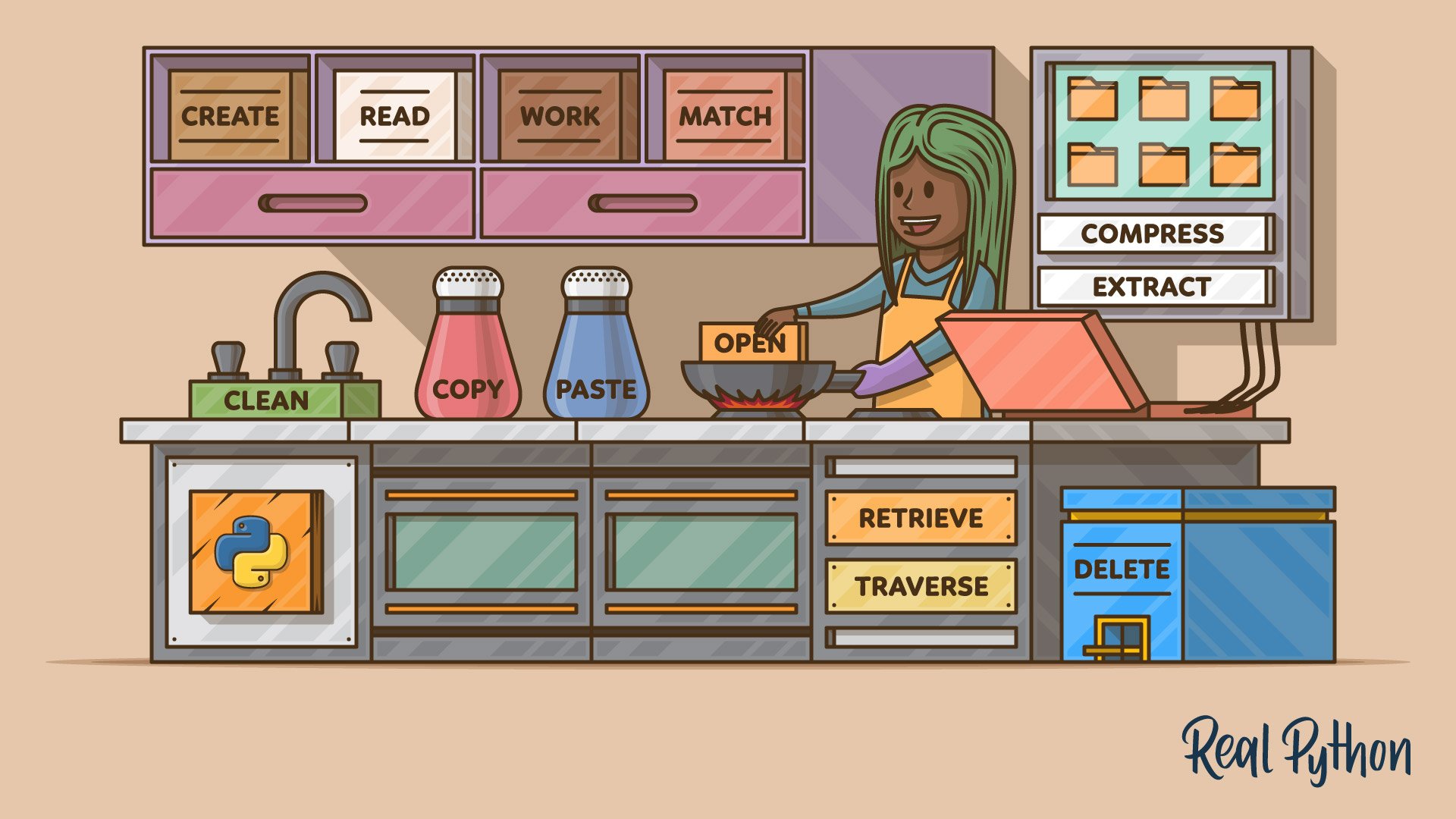 In this tutorial, you'll learn how you can work with files in Python by using built-in modules to perform practical tasks that involve groups of files, like renaming them, moving them around, archiving them, and getting their metadata.